




When children begin their literacy journey, they learn the building blocks of language: letters and sounds. Very quickly, they discover that not every sound matches neatly with a single letter. Enter the digraph, one of the most important stepping stones in early reading and spelling.
Understanding digraphs gives students the tools to tackle more complex words, expand their vocabulary, and grow in confidence as readers. For parents and teachers alike, recognising what a digraph is and how to teach it effectively can make a world of difference.

What Exactly is a Digraph?
A digraph is a pair of letters that come together to represent a single sound. The word comes from Greek: di, meaning “two” and graph, meaning “written”. Unlike a blend, where you can still hear both sounds (cl in clap), a digraph fuses two letters into one sound.
For example:
- sh in ship
- ch in chop
- th in thin
In each of these words, the two letters form a sound that cannot be separated without changing the word entirely.
There are two main types of digraphs: consonant digraphs and vowel digraphs. Let’s break them down.
Consonant Digraphs
Consonant digraphs are pairs of consonants that combine to make a single sound. Some of the most common include:
- sh → shop, ship, fish
- ch → chip, chair, lunch
- th → thin, bath, with (unvoiced) / this, that, them (voiced)
- ph → phone, elephant, graph
- wh → what, when, wheel
Teaching tip: It’s helpful to start with high-frequency digraphs like sh and ch. These appear often in beginner readers and are easier to spot in everyday language.
Students enjoy exploring consonant digraphs because they quickly see how words change meaning with a slight shift. For example, ship versus chip is a classic comparison that brings the concept to life.
Vowel Digraphs
Vowel digraphs occur when two vowels work together to create a single sound. Unlike consonant digraphs, these can sometimes be trickier because the sound produced isn’t always consistent.
Some examples include:
- ai → rain, snail, paint
- ea → bead, read, seat (long e) / bread, head (short e)
- oa → boat, coat, toad
- ee → tree, green, feet
- ie → pie, tie, cried
Notice how the ea digraph can be pronounced differently (bead vs bread). This is where students often stumble, but it’s also an opportunity to expand their awareness of English’s quirks.

Why Do Digraphs Matter in Literacy?
Mastering digraphs is more than just ticking a box on the phonics chart. They’re central to literacy development because they:
- Support decoding skills – Once learners understand that ch makes one sound, they can decode words like chicken or cheese more easily.
- Improve spelling – Recognising sound-letter patterns helps children spell words accurately.
- Build reading fluency – Digraphs allow students to move beyond simple CVC (consonant-vowel-consonant) words into richer vocabulary.
- Boost confidence – Every time a child cracks a new digraph, they unlock dozens of new words to read and write.
This is particularly important in Australia, where, according to recent NAPLAN results, one in three students fails to meet literacy benchmarks. Reports from the Grattan Institute also highlight the urgent need for structured, evidence-based literacy approaches, including phonics and digraph instruction, to reverse these trends.
Common Challenges for Learners
Even though digraphs are essential, they don’t always come easily. Some of the most frequent challenges include:
- Confusing blends with digraphs: A blend like bl in blue still has two separate sounds, whereas a digraph like sh merges into one.
- Sound variations: The th digraph can be voiced (this, that) or unvoiced (thin, bath), which takes practice to master.
- Overgeneralisation: Learners may apply one pronunciation rule to all cases, like reading ea as long e in every word, leading to mistakes with bread or head.
Research shows that systematic phonics instruction produces stronger reading, spelling, and comprehension outcomes than less structured approaches (NSW Education, CESE Report).
Strategies for Teaching Digraphs
The most successful teaching approaches blend systematic instruction with playful practice. Here are a few strategies:
- Multi-sensory learning: Encourage children to see the digraph, say the sound, hear it in a word, and even trace it in sand or on paper.
- Sorting activities: Create word cards for different digraphs and ask learners to group them – for example, sort ship, chin, bath, when into their correct digraph categories.
- Word hunts: Challenge students to find digraphs in books, signs, or classroom displays.
- Songs and rhymes: Music makes patterns memorable. Short chants like “ch, ch, choo-choo train” help cement sounds.
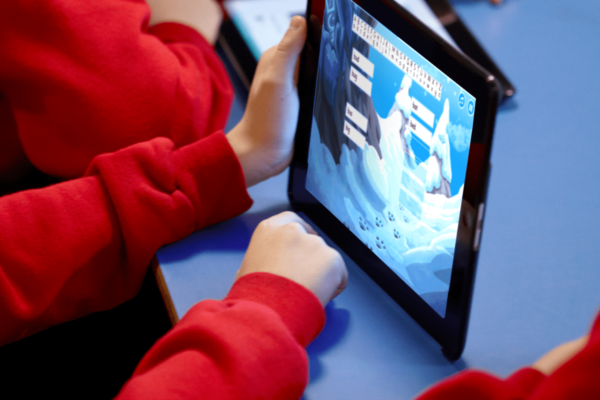
- Gamified practice: Digital tools such as LiteracyPlanet make practising digraphs interactive and engaging. For example:
- In Sight Word Missions, students encounter high-frequency digraph words in playful quests that reinforce recognition.
- Word Morph challenges learners to change one letter at a time, showing how adding or swapping a digraph transforms meaning (ship → chip → chip).
- Younger children can tap and drag letters in phonics games to build sh, ch, or th words, receiving instant feedback and rewards that encourage persistence.
- In Sight Word Missions, students encounter high-frequency digraph words in playful quests that reinforce recognition.
The more contexts children see digraphs in, especially in gamified activities that feel like play, the quicker they’ll lock the sounds into long-term memory.
Examples in Action
Here’s a quick set of examples you can use straight away with learners:
Consonant Digraphs
- The sheep ran to the church.
- I can see the phone on the table.
- The three whales swam away.
Vowel Digraphs
- The ain fell on the oak tree.
- We like to eat eels with peas.
- She will tie the bow before bed.
Students notice how digraphs function in real sentences by highlighting and reading these aloud.

Digraphs Beyond the Early Years
It’s easy to think digraphs are only relevant in Prep or Year 1 classrooms, but they continue to play a role throughout schooling. Older students encounter them in:
- Spelling rules: Understanding that ph often represents the /f/ sound helps with complex words like photosynthesis.
- Morphology: Knowledge of digraphs supports decoding longer words built from roots and affixes.
- Vocabulary expansion: Science, history, and literature words often contain multiple digraphs.
By reinforcing these patterns early, we set learners up for long-term success across all subject areas.
Supporting Literacy at Home and in Class
Whether you’re a teacher planning lessons or a parent supporting reading at home, exposure and practice are key. Some quick ways to help children succeed include:
- Reading aloud together and pointing out digraphs.
- Using flashcards or apps to reinforce tricky sounds.
- Encouraging writing exercises where students try words with target digraphs.
- Celebrating progress – even small wins, like correctly spelling ship or rain, deserve recognition.
- Harnessing LiteracyPlanet’s app-based games adapts to each child’s level and provides real-time feedback. Teachers can assign digraph-focused missions, while parents can view progress reports highlighting which sounds are mastered and which need more attention.
These interactive, curriculum-aligned tools save time for teachers and give learners an exciting, game-like environment where practice never feels like a chore.
Turning Digraphs Into Confidence
Digraphs may only be two letters long, but their impact on literacy is enormous. They open the door to richer vocabulary, smoother reading, and more accurate spelling. By teaching them clarity, creativity, and consistency, we equip students with skills that will carry them through their education.
With curriculum-aligned activities, personalised learning pathways, and engaging games, LiteracyPlanet makes mastering digraphs fun and effective for students everywhere. Whether you’re in the classroom or learning at home, digraphs don’t have to be daunting – they can be exciting milestones in every child’s reading journey. Download our App and get started for Free!