




TL;DR
- Around one in three Australian students is below literacy benchmarks.
- States like Victoria are introducing daily systematic phonics lessons.
- Research from Evidence for Learning and Macquarie University proves explicit phonics improves reading, spelling, and comprehension.
- LiteracyPlanet supports teachers and parents with curriculum-aligned, gamified phonics lessons.
Learning to read is one of the most critical milestones in a child’s education, yet too many Australian students are falling behind. Recent national results show widening literacy gaps between proficient and struggling readers, especially in the early primary years.
The good news? There’s a straightforward, evidence-based solution – phonics. When taught systematically and explicitly, phonics helps children decode, spell, and comprehend words confidently.
The Literacy Gap in Australia
Australia’s most recent literacy results show that thousands of students are not meeting expected reading standards. According to NAPLAN 2025, roughly one in three students performs below proficiency in reading and writing tasks.
This aligns with the Australian Curriculum, Assessment and Reporting Authority (ACARA) findings, which have urged schools to prioritise foundational literacy skills to improve national performance.
In response, states like Victoria are taking action. The Victorian Government announced that from 2025, all government primary schools will implement daily systematic synthetic phonics instruction in Prep to Grade 2 classrooms.
This policy shift reflects a growing national consensus: explicit phonics teaching works, and it’s time to make it standard practice across Australia.
What Is Phonics, and How Does Does It Work

Phonics teaches the link between written letters and spoken sounds. It helps children decode new words, recognise spelling patterns, and develop the fluency needed for comprehension.
Core elements include:
- Phonemic awareness – recognising and manipulating the individual sounds in words.
- Graphemes – the written letters or letter groups that represent those sounds.
- Systematic instruction introduces sound letter patterns in a precise, structured sequence.
Australian researchers Buckingham, Wheldall and Wheldall describe systematic phonics as a “scientific, evidence-based approach” to teaching the alphabetic principle.
Explicit phonics instruction supports students in identifying, segmenting, and blending sounds – foundational skills that underpin lifelong literacy.
Phonics in Practice: Why It’s So Effective
Australian evidence consistently shows that systematic phonics instruction delivers measurable literacy gains.
The Evidence for Learning, Teaching & Learning Toolkit reports that phonics provides one of the highest impacts of any literacy strategy when taught explicitly and consistently.
Meanwhile, research from Edith Cowan University highlights that phonics supports decoding and spelling and enhances comprehension, because children can focus on meaning rather than word recognition.
How Phonics Builds Key Reading Skills
Phonics connects three essential components of reading success:
1. Decoding
Children learn to sound out unfamiliar words by linking letters to sounds. For example, understanding that th represents one sound and ai makes a long vowel helps them read this and rain accurately.
2. Spelling
Phonics gives students predictable rules for constructing words. They learn that photo uses ph for the /f/ sound and that ship begins with sh, not just s.
3. Comprehension
Once decoding becomes automatic, cognitive energy shifts toward understanding meaning. Students can interpret ideas, infer context, and enjoy reading more deeply.
As one Victorian teacher noted in an ABC News report, “When phonics is taught explicitly, reading comprehension takes off – students move from sounding out words to truly understanding them.”
Why Gaps Still Exist
Despite clear research, phonics implementation remains inconsistent across schools. Some classrooms still lean heavily on “whole language” or “balanced literacy” approaches, which encourage guessing words from pictures or context instead of decoding them.
Experts argue that these methods disadvantage students who need more explicit instruction. Speech Pathology Australia notes that children with language delays or limited exposure to spoken English particularly benefit from systematic phonics.
The Literacy Hub emphasises that explicit, step-by-step instruction remains the most reliable path to early reading success.
How LiteracyPlanet Supports Phonics Instruction
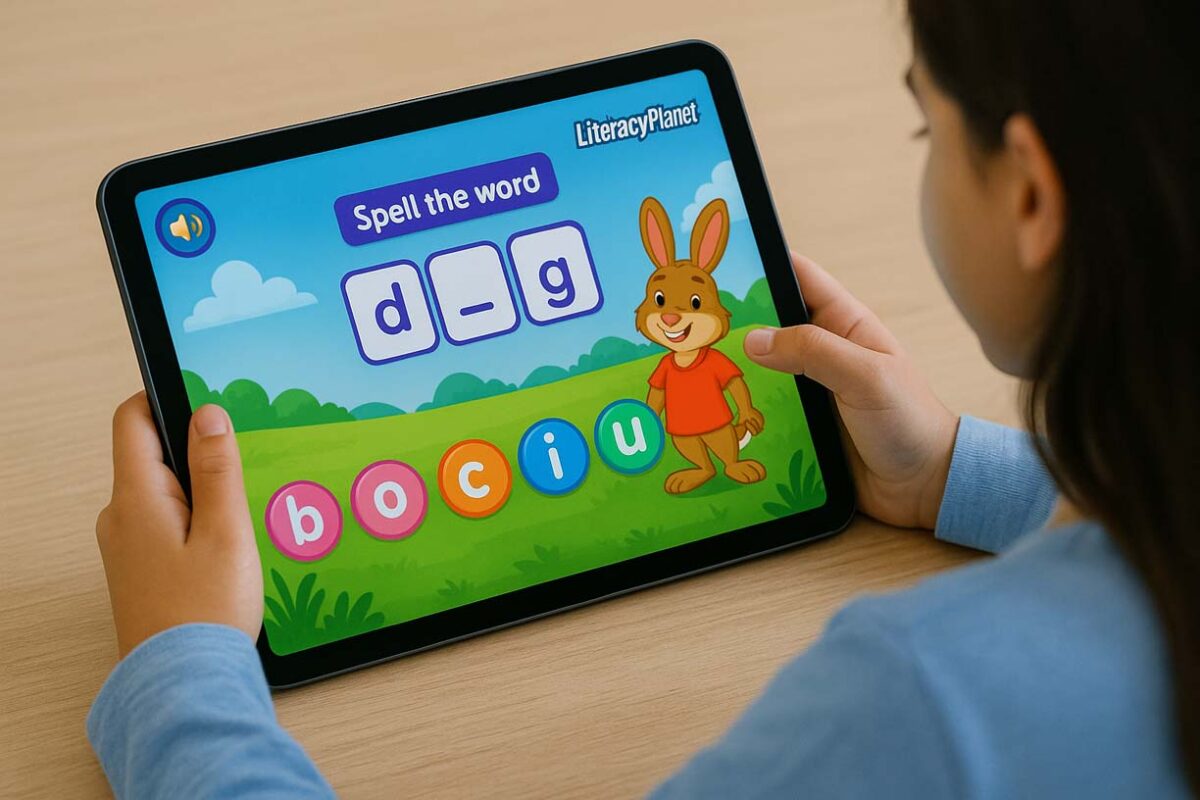
Phonics instruction doesn’t have to be repetitive – digital tools like LiteracyPlanet make it interactive, measurable, and fun.
In the Classroom
- Phonics Games: Build recognition of sound–letter patterns through adaptive practice.
- Sight Word Missions: Introduce high-frequency phonics patterns and digraphs in context.
- Word Morph: This activity challenges students to change one letter or sound at a time to form new words, strengthening their decoding skills.
For Teachers
- Real-time dashboards track progress across phonemes and digraphs.
- Curriculum-aligned lesson structures save time and ensure sequencing consistency.
For Parents
Home users can access phonics activities for kids that reinforce classroom learning through gamified missions. Rewards, progress feedback, and engaging character-led lessons help children stay motivated.
Connecting the Dots: Phonics, Digraphs, and Reading Growth
Phonics is the broader system that enables children to recognise letter-sound relationships, while digraphs are one of its building blocks. To explore this link further, see Phonics vs Digraphs: What’s the Difference?.
For a deeper look at how phonemes, digraphs, and blends work, visit The Building Blocks of Reading: Phonemes, Digraphs, Blends and Beyond.
Together, these elements give children the foundation for fluent, confident reading.
FAQs
What is systematic phonics instruction?
It’s a structured approach that systematically teaches sound–letter relationships, from simple phonemes to complex digraphs and blends.
Why is phonics important for reading?
It helps children decode and spell unfamiliar words, building accuracy, fluency, and comprehension.
Is phonics taught in all Australian schools?
Not yet, though more states are mandating explicit phonics instruction in early primary classrooms.
How does LiteracyPlanet teach phonics?
Through adaptive phonics games, sight word missions, and teacher dashboards that make progress easy to track.